doubt

Son of God?

Son of God?

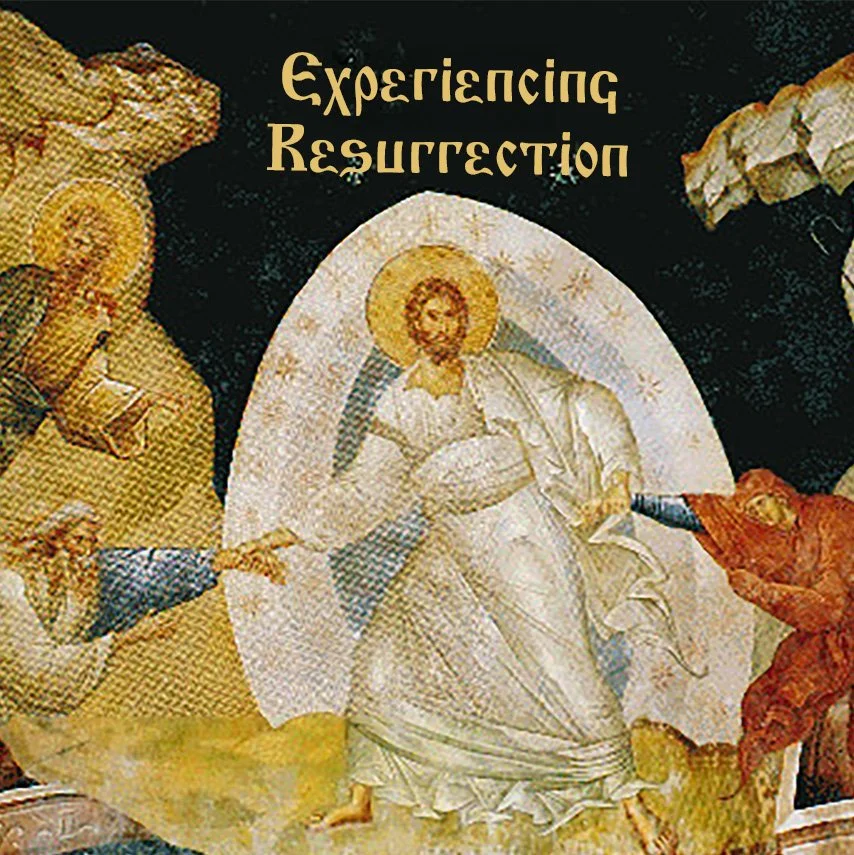
Experiencing Resurrection: Part 1
April 12, 2026

Matthew 27:62-28:15

When the centurion, who stood facing Jesus, saw how he died, he said, “This man was certainly God’s Son.”

 Mark 15:39

_______________  

"Even in Israel I haven't found faith like this."

That's what Jesus told the crowds the day he healed a centurion's servant. But the centurion never wanted to be a model of faith (Luke 7:1-10).  He had no interest in Jesus' religion. If anything, what he did that day was a last-ditch hope, an act of sheer desperation. He wasn't interested in the God of Abraham. He just thought if this teacher they called Jesus could heal others, maybe he might just have a little miracle left over for him and his servant.

And yet. Jesus called it faith.

We don’t know if this was the same centurion we see at the cross but imagine for a moment that it was.  He finds himself passing down the order to crucify that same teacher.  
Seeing Jesus carry the cross beam up the hill stops him in his tracks. He feels a knot growing in his stomach. He had never questioned an order before in his life, but this one just didn't feel right.

He couldn't explain what happened next. The tomb was empty. Dead men don't walk again. So he went along with the cover story. After all, the winners always write history. Surely this would all be forgotten in a few years.

Still, he wondered.

What if this man was the Son of God?

He had pledged his allegiance to Caesar, the one his world called Son of God, savior, prince of peace. But that man, that rabbi, died with more dignity than Caesar had ever shown. Jesus faced the weight of the entire Roman military, unarmed and unafraid. He never resisted his fate, no matter how undeserved. Jesus died like a king. Not the kind of king Rome would ever recognize, but maybe the kind of king we still need today.

We are never told if the centurion becomes a follower of Jesus, but I can imagine him whispering Jesus’ name in the darkness, shaken by all he has seen.  His question lingers for all of us: what would it cost to tell the truth about what we've seen? And what loyalties, comforts, or fears keep us from saying it out loud?

Sometimes our dreams are too small. Like the centurion, it's easy to stay focused only on what's right in front of us.  We tend to live in problem-solving mode, survival mode, just doing our jobs.

We don't serve others so that our church will grow, or so that God will bless us. We serve because that's who we are as followers of Christ. We love because God first loved us.

The centurion didn't know it yet, but he had already encountered the kind of king worth giving everything for and the kind of friend who would give his life for him.

Maybe we have too.


  • Where do you notice competing loyalties in your own life, whether to systems, expectations, or identities, that make it harder to follow Jesus?

  • Reflect on an experience you could not explain but also could not ignore that shifted how you see God.

The Sin of Certainty

The Sin of Certainty

Reflections on the Wesleyan Quadrilateral - Experience
September 8, 2024


1 John 1:1-3, Romans 8:16

see also:
John 5:39-40, Matthew 7:15-23


We announce to you what existed from the beginning, what we have heard, what we have seen with our eyes, what we have seen and our hands handled, about the word of life.  The life was revealed, and we have seen, and we testify and announce to you the eternal life that was with the Father and was revealed to us.  What we have seen and heard, we also announce it to you so that you can have fellowship with us. Our fellowship is with the Father and with his Son, Jesus Christ.

1 John 1:1-3

_______________


“We announce to you what we have heard, what we have seen with our eyes, what we have seen and our hands handled, about the word of life.”  In other words, what we proclaim to you about God is what we ourselves have seen, heard and touched.  Or to put it another way, we are sharing with you our “experience” of God.

Some have said that we cannot trust our experience because we are fallen human beings tainted by sin.  While there is certainly truth to the ways sin skews our perspective, it is equally true that we cannot know  anything except through the lens of our lived experience.  There is no idealized form of any object that can be described apart from the way one perceives it.  If ten people were to describe a particular tree, for example, there would certainly be similar elements such as color, parts like bark, leaves or branches, perhaps certain textures, etc.  And yet each description would be so unique in other ways that one might wonder if they are all describing the same tree.  One person might notice tiny holes from bugs that were eating at it, and another might notice the moss along the base.  Still another might zero in on a birds nest or a particular knot where a branch seemed to grow in an unlikely direction.  All of these details say as much about our experience of the tree as they do about the tree itself.

If each person would notice different aspects of a tree, how much more will each person have their own unique experience of God.  Even scripture is not “immune” from the impact of experience.  The Biblical writers to not have an objective source of information about God that is universally accepted as scientifically tested and verified fact.  Rather, they each write through the lens of their own experiences of God in their lives.  Abraham encounters God in the visitation of three strangers.  Moses experiences God in a burning bush.  Elijah sees God in the all consuming fire, hears God in the silence, and is nourished by God through bread and rest under the broom tree.  

People experience Jesus differently too.  The lepers and the tax collectors, for example, have a very different perception of who he is than the Jewish leaders who put him on trial.  Everything we know about God is mediated through someone’s experience and more likely, through the culmination of many people’s experiences throughout the centuries including our own.  In his letter to the Romans, Paul says that we “...received a Spirit that shows you are adopted as his children. With this Spirit, we cry, “Abba, Father.” The same Spirit agrees with our spirit, that we are God’s children.  (Romans 8:15-16). 

God sent the Spirit so that we could fully experience his loving presence and share that experience with others along the way.


We do not see things as they are. We see things as we are

~ Rabbi Shemuel ben Nachmani, as quoted in the Talmudic tractate Berakhot (55b.)


Devoted Thomas

Devoted Thomas

“Doubting Thomas”… That’s what they call me. But you never hear anybody talk about doubting James or doubting Philip or Matthew or Bartholomew? It was just as hard for them to believe. And what about you… did you believe the first time you heard that somebody had come back to life after three days in the grave? Do you believe now? Would anybody know you believe it? Call me what you want, but I say, who wouldn’t doubt that…

So Hard to Believe

So Hard to Believe

Advent and Christmas can serve as a type of “thin place” in our church calendar. It is a season when the veil between heaven and earth seems more thin than usual. It may be a place where the holy and the ordinary meet.

That’s what this week’s song is about as we move into the Advent season. May the weeks ahead be filled with “thin places” where you encounter the miracle of God with us in beautiful and amazing ways.