sight

Seeing Again

Seeing Again

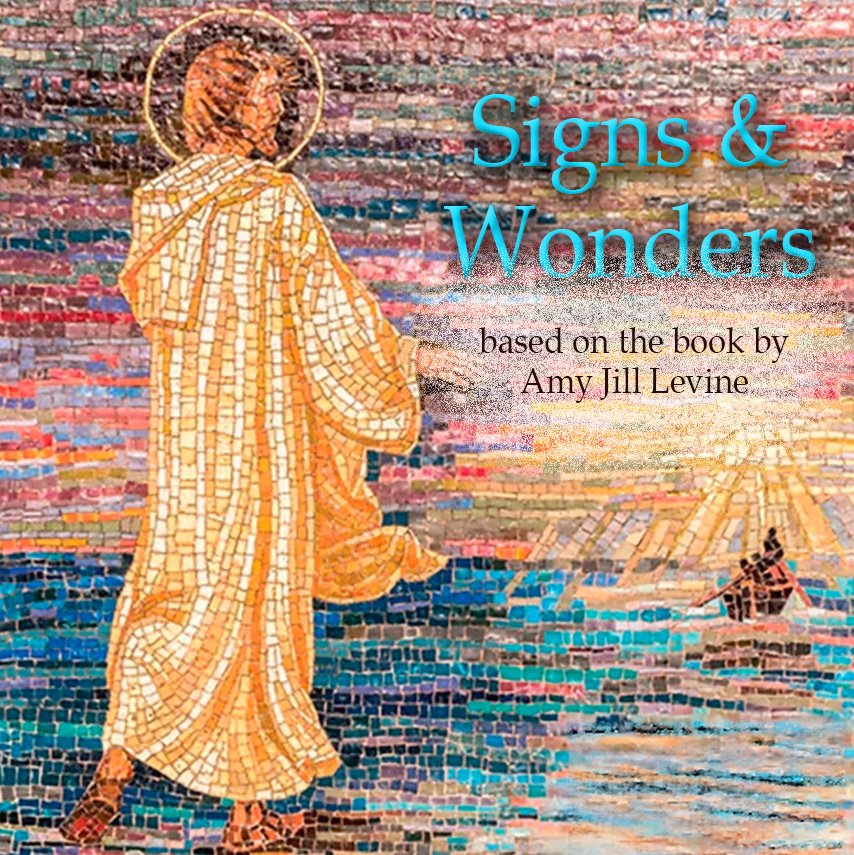
Signs & Wonders: Part 4
February 8, 2026

Mark 8:22-26


Jesus and his disciples came to Bethsaida. Some people brought a blind man to Jesus and begged him to touch and heal him.  Taking the blind man’s hand, Jesus led him out of the village. After spitting on his eyes and laying his hands on the man, he asked him, “Do you see anything?”

The man looked up and said, “I see people. They look like trees, only they are walking around.”

Then Jesus placed his hands on the man’s eyes again. He looked with his eyes wide open, his sight was restored, and he could see everything clearly.  Then Jesus sent him home, saying, “Don’t go into the village!”

~ Mark 8:22-26

_______________

Last week we saw Jesus heal a woman who touched only the hem of his robe and raise a young girl from the dead with a single word.  So why, in today’s story, does he seem to be struggling with the simple act of giving sight to the blind?  After all, this is exactly what he said he came for: to preach good news to the poor, to proclaim release to the prisoners and recovery of sight to the blind, to liberate the oppressed (Luke 4:18).

Yet when the blind man begins to see, his vision is still not clear.  He sees people, but they look like trees.  Some wonder whether Jesus failed or whether this man lacked the faith needed to experience full healing.  Others see it as a metaphor for the spiritual life and the ways that our eyes are slowly opened to God’s work in our lives.

The spiritual explanation certainly feels more reasonable, especially as this passage is sandwiched between the disciple’s lack of understanding about the yeast of the Pharisees and Peter’s confession of Jesus as the Messiah followed immediately by a significant misunderstanding about what this truth actually implied. 

But if we’re willing to take a honest look at ourselves, the truth may be even more practical.  We live in a world where seeing clearly is increasingly difficult.  Images and videos are easily faked or manipulated to present us with an alternate version of reality, to effectually make us see certain people as something less than human – to see trees instead of people.  Much of this artificially generated propaganda is designed with the purpose of dehumanizing others, making them easier to dismiss, to control, or to fear.

The problem is that so many of us stop there.  We take in the image of these “tree people” and assume this is just the way things are, especially if the image reinforces how we already see the world.  Taking a second look might be as simple as flipping to a different channel or seeing another camera angle, but we don’t dare consider this option for fear of being alienated from our tribe who sees things the same way we have been taught to see them.  It is unsettling when the reality we see does not align with the reality we are taught to accept.

Perhaps this story is less about Jesus’ power to heal and more about our willingness to stay engaged with Jesus long enough to receive a second touch, and to take a second look and what once seemed so clear.

What is one way this week you can open yourself to a second healing, to look more carefully and ask God for clearer sight?

The Barrier of Perception

The Barrier of Perception

Our problem is not with sight.  With today's advancements in eye-care technology, most of us can see.

Our problem is not with vision.  We've all got a "vision", a dream, a goal of what we think things ought to look like.

Our problem is perception.  We see, but we do not perceive.  We have vision, but our dreams are far too small.

Like the blind man in Bethsaida, we have been touched by Jesus, we have the faith to see, but the people still look like trees…

Seeing Beyond Vision

Seeing Beyond Vision

Here we are a month into 2020 and everyone is still talking about clear vision. Personally, I think the metaphor has worn a bit thin. Rather than jumping on the “20/20 Vision” bandwagon on New Years, I held off this particular reflection to give us time to lament our “Not-okay-ness.” We cannot expect to find a clear path forward if we don’t know where we are. As we come together in this “not-OK” place and learn to wander together toward hope, seeking clear vision becomes a common goal.

There’s only one problem with this whole idea of “clear vision”… It’s all an illusion…

God's Eye

Croagh-Patrick.jpg

I arise today...
Through God’s eye to look before me...

The Lorica of Saint Patrick (St. Patrick's Breastplate Prayer)

In spite of this, you did not trust in the Lord your God, who went ahead of you on your journey, in fire by night and in a cloud by day, to search out places for you to camp and to show you the way you should go.

Deuteronomy 1:32-33

Deuteronomy 1 tells the story of Israelite spies who looked ahead to the land God had promised them but in seeing the inhabitants there, they turned back and grumbled against God for leading them into an impossible situation. God’s eye had looked before them even as they cried out from slavery in Egypt, and God’s eye saw a future filled with hope and blessing for all the world through this people he had redeemed, but they could only see through the eyes of fear.

As we arise today through God’s eye to look before us, two questions come to mind.

First, Do we really trust that God’s eye is looking out before us?

God set his people free from Egypt and looked out for them day after day in the wilderness, providing for their every need. Still the people grumbled and did not trust that God was truly looking out for them. Over and over again in Scripture we find God’s people complaining that God has led them into a trap, that God has abandoned them, that God would not take care of them, that somehow God’s way was not good enough. Even in the gospels, we find Jesus looking ahead through God’s eyes at the suffering he would have to endure and his closest friend Peter challenges him.

Then Peter took hold of Jesus and, scolding him, began to correct him: “God forbid, Lord! This won’t happen to you.” But he turned to Peter and said, “Get behind me, Satan. You are a stone that could make me stumble, for you are not thinking God’s thoughts but human thoughts.”

Matthew 16:22-23

God sees the path more clearly than any of us, but sometimes it is difficult to trust. Like the famous “Leap of Faith” scene in Indiana Jones and the Last Crusade, sometimes we can’t even see the bridge God is asking us to cross. We’re not even sure there is anything there to step on. Where is God leading us?

That leads to our second question, “Do we really want God’s eye to look out before us, or would we rather just see for ourselves?”

Have you ever played “Follow the Leader” with your eyes closed or blindfolded. It’s a classic children’s game in church to teach lessons about faith and listening to the Spirit. The goal is to go wherever the leader tells you to go, trusting that they won’t lead you to walk into a wall or a chair. Sometimes there is an added layer of having everybody give directions so you have to listen more carefully for the leader’s voice to know which way to go in the midst of the chaos.

Honestly, I always hated those games. I don’t think I’ve ever completed one without peeking. Sometimes I didn’t trust the leader, but often times, I didn’t trust myself. What if I heard the direction wrong? What if he says left and he meant his left instead of mine? It’s one thing for kids to wander blindly around a classroom, but what if you tried to do the same thing while driving with only a voice over the phone to tell you when to turn, when to brake, etc. The stakes just got a lot higher and I imagine even the most faithful among us would not take on such a challenge.

Yet that’s often what it feels like to trust God’s eyes instead of our own. When all we see ahead is fog, do we really want to trust that God can still see the way, or would we rather just camp out for awhile until the fog clears and we can see for ourselves.

Here’s the irony. We naturally trust our own sight more than we trust what someone else sees, even if that someone is God. Yet whenever God’s people in Scripture rely on their own sight, they almost always take a wrong turn. Why? Because their vision, like ours, is clouded. Our vision is blurred by sin, by doubts, by pain, and most often by fear. We never see as clearly as we think we do.

Maybe this is why Jesus tells the Pharisees, “If you were blind, you wouldn’t have any sin, but now that you say, ‘We see,’ your sin remains” (John 9:41).

This original song written in 2017 speaks to all of those moments when we either can't see or don't want to see the way God is leading us through the chaos of life.

Reflections:

1. How do you think you would score on a “spiritual vision test?” What “astigmatisms” keep you from seeing clearly? Fear? Doubt? Hurt? Sin? Something else?

2. Reflect on a time when you truly took a leap of faith and trusted God’s leading, even when it looked absurd or impossible to you? What was the outcome?

3. Read the story of the blind man in John 9:1-41. Where do you find yourself in the story? Who do you most identify with?


Our journey through St. Patrick's Breastplate Prayer continues next week:

... I arise today,
Through God’s ear to hear me…

Pray along with the full text of St. Patrick's Breastplate Prayer