
Freedom to Be You
Freedom: Part 1
July 5, 2026
But when Cephas came to Antioch, I opposed him to his face, because he was wrong. He had been eating with the Gentiles before certain people came from James. But when they came, he began to draw back and separate himself, because he was afraid of the circumcision faction.
~ Galatians 2:11-12
_______________
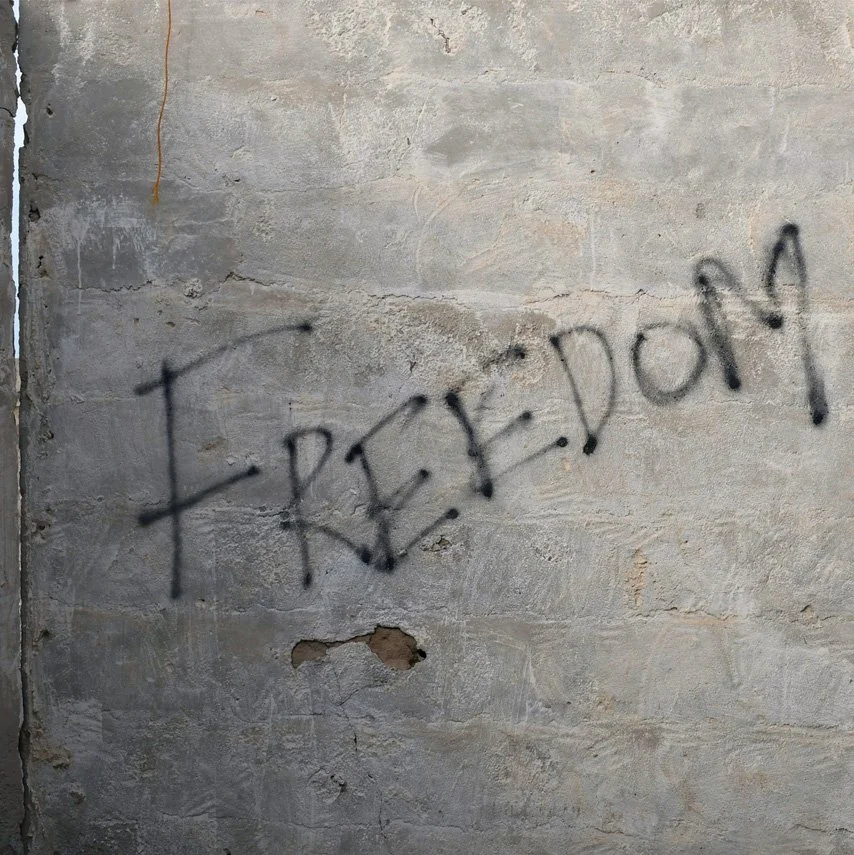
As we honor the 250th anniversary of our nation this weekend, we hold space for both joyful celebration and the heaviness of lament. We are a nation built on many freedoms, not the least of which is the freedom of religion, and at the same time, we have not lived up to that promise for all people. Over the next five weeks, we’re going to wrestle with Paul’s letter to the Galatians, a church where they were having their own arguments about what freedom meant, and who was included.
The Galatians were mostly Gentile Christians with no Jewish background and no connection to Jewish tradition or identity markers such as circumcision, dietary laws, or festivals. They responded to Paul’s message of grace through Christ and the Spirit was clearly at work among them.
After Paul left, however, other teachers came and told them that faith in Christ was not enough. They must conform their way of life to align with Jewish identity. Some church leaders including Peter and Barnabas, who had shared openly in Chrisitan hospitality with the Gentile believers, were now pulling away for fear of their reputation among their stricter traditionalist colleagues.
It is not hard to see the parallels to our own day. Various segments of the larger Christian church continue to vie for power and control over who can rightly be considered a Christian. Even worse, many have become so entrenched with contemporary political ideologies and partisan voting blocs that there is hardly a noticeable distinction between being a good Christian and being what in their opinion is a good American. By making America look and sound more “Christian”, at least on the surface, it becomes easier to justify their place of privilege and dominant influence overthe larger culture. But often this results in the public form of Christianity without the substance, in appearance over faith, and in conformity over freedom.
In 1636, Puritan minister Roger Williams was banished from the Massachusetts Bay Colony for sedition and heresy because he declared that civil authorities should not coerce conformity to any faith, including Christianity. Rather, faith should always be a matter of conscience, freely chosen and practiced by each individual without compulsion. Soon after, he founded Providence, Rhode Island as a sanctuary for Baptists, Quakers, Jews, Huguenots, and any other group who had been excluded by the dominant religious culture.
Though I have not suffered nearly the persecution Williams experienced, I have found myself “banished” from many churches and Christian groups. I have regularly been told I am “not really be a Christian” because I do not align with certain political agendas that I find to be at odds with the teachings of Jesus.
Regardless of where we find ourselves in the polarized climate of our time, Paul’s challenge remains firm. To make any cultural, religious, or political marker a condition for being part of the body of Christ is a false gospel. Full stop.
God has already chosen who is welcome at the table, and no one is excluded.
For my personal reflections on the 4th of july this year and the ongoing tension between faith and nationalism, check out my substack post here: An Altar Wrapped in Flags.