
Good News: Looking Back to Look Ahead
Christmas Letters: Part 1
November 30, 2025
God promised this good news about his Son ahead of time through his prophets in the holy scriptures. His Son was descended from David. He was publicly identified as God’s Son with power through his resurrection from the dead, which was based on the Spirit of holiness. This Son is Jesus Christ our Lord.
~ Romans 1:2-4
_______________
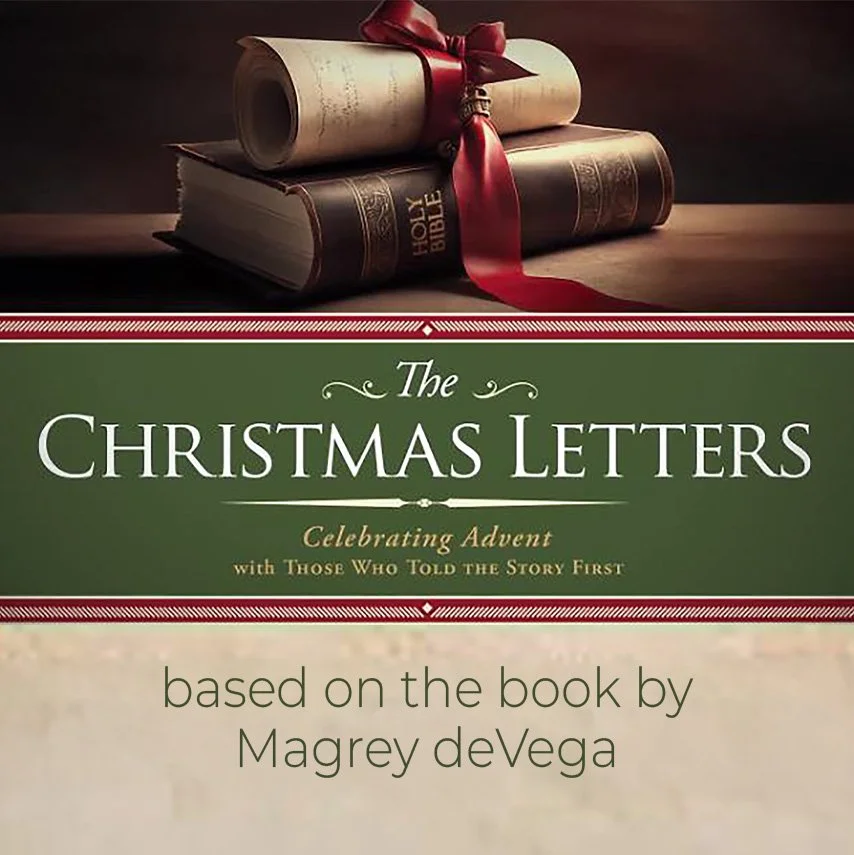
Advent Reflections based on The Christmas Letters, by Magrey R. DeVega.
In his letter to the Romans, Paul begins by grounding the identity of Jesus in the prophetic tradition. He will quote or paraphrase the prophets over twenty times throughout this letter, with particular emphasis on Isaiah. He wanted this new fledgling church in Rome to know that the coming of Christ, their Messiah, was not a spontaneous, surprising event, but one that had been anticipated for generations.
While Isaiah and the other prophets were specifically writing about the exile of God’s people to Assyria and Babylon, Paul understands the cyclical nature of history and prophecy and identifies his present audience as those who are also longing for deliverance and liberation, just as their ancestors had. In the same way, this prophetic tradition speaks to our own desire for deliverance from sin, injustice, and other forms of oppression in our world.
The words of the prophets call us to acknowledge the depths of our own spiritual hunger and longing. They invite us to give ourselves to others in acts of love and peace. As Paul did for his own time, we must also receive the words of scripture and make them our own.
Take some time to meditate on the following passages from Isaiah most often quoted during this season:
Isaiah 2:4
4 He shall judge between the nations
and shall arbitrate for many peoples;
they shall beat their swords into plowshares
and their spears into pruning hooks;
nation shall not lift up sword against nation;
neither shall they learn war any more.
Isaiah 11:1
11 A shoot shall come out from the stump of Jesse,
and a branch shall grow out of his roots.
Isaiah 11:5-6
5 Righteousness shall be the belt around his waist
and faithfulness the belt around his loins.
6 The wolf shall live with the lamb;
the leopard shall lie down with the kid;
the calf and the lion will feed together,
and a little child shall lead them.
Isaiah 35:3-4
3 Strengthen the weak hands
and make firm the feeble knees.
4 Say to those who are of a fearful heart,
“Be strong, do not fear!
Here is your God.
He will come with vengeance,
with terrible recompense.
He will come and save you.”
Isaiah 7:14
14 Therefore the Lord himself will give you a sign. Look, the young woman is with child and shall bear a son and shall name him Immanuel.
Isaiah 64:1-2
64 O that you would tear open the heavens and come down,
so that the mountains would quake at your presence—
2 as when fire kindles brushwood
and the fire causes water to boil—
to make your name known to your adversaries,
so that the nations might tremble at your presence!
Isaiah 40:1-5
40 Comfort, O comfort my people,
says your God.
2 Speak tenderly to Jerusalem,
and cry to her
that she has served her term,
that her penalty is paid,
that she has received from the Lord’s hand
double for all her sins.
3 A voice cries out:
“In the wilderness prepare the way of the Lord;
make straight in the desert a highway for our God.
4 Every valley shall be lifted up,
and every mountain and hill be made low;
the uneven ground shall become level,
and the rough places a plain.
5 Then the glory of the Lord shall be revealed,
and all flesh shall see it together,
for the mouth of the Lord has spoken.”
Isaiah 61:1-2
61 The spirit of the Lord God is upon me
because the Lord has anointed me;
he has sent me to bring good news to the oppressed,
to bind up the brokenhearted,
to proclaim liberty to the captives
and release to the prisoners,
2 to proclaim the year of the Lord’s favor
and the day of vengeance of our God,
to comfort all who mourn,
_______________
What impact do the prophet’s words about the Messiah have on your own life, especially as you prepare for a fresh arrival of Jesus this Advent?
